
Wahhabis
aredivided into different
Salafi Sects
are
Salafi Sects
Madhkhalee, Qutubis and
Jihadists ...etc

The
Wahhabis who are blind supporters of Kingdom of Saudi Arabia's
illegitimate rule and its policies are called:
The Madhkhalees

^These Wahhabis do not want to talk about any changes in Saudi Kingdom. They support
all policies of Saudi Kingdom like their support to the USA, inviting
the US Army in the past to attack Iraq. In short, they are blind
supporters of Saudi Government and use personal interpretation of
Quranic verses and hadith to prove their point.They follow a Scholar
called Raabee ibn Haadee Al-Maadkhaalee. http://madkhalis.com/
The Qutbis

^
Are the Wahhabis who
want a change in Kingdom of Saudi Arabia and use a Qauranic verse(
Anyone who rules by other than what Allah has revealed) to call all
rulers of Saudi Arabia as Kafir. The "Qutubi
Salafi" faction
who like Syed
Qutb, who
to my knowledge was an Islamic activist who was executed by
the Egyptian
Govt. http://www.takfiris.com/takfir/
The Salafi Jihadist

2014
2014

There
are many branches of
Wahhabi
Evil
Salafi Talafis, Pathless, Ikhwan
Madkali
Salafis, Saudi Salafis, Jihadi Salafis, Qutubis, Sururis,
The
Wahhabiyyah Admirers
Wahhabiyyah Admirers
The Ahle Hadis:

Not to forget their
Sisters
Sisters

The Deobandis
which are of Two Twins:
which are of Two Twins:

^ Hayati and Mamati
Hold
on...they also have a young
brother called:
The Tableeghi
Jamaat

---
I know what you are thinking!

----------------------------------
Their Admirers
WAHHABISM & DEOBANDISM "HAND AND GLOVE" ?
Munāfiq Hypocrite
Gustakh e Rasool
--
*They
we’re in the habit of insulting and degrading the
dignity of Allah’s Beloved Messenger (Sallallahu Alayhi
Wasallam).
*They considered the
Prophet (Sallallahu Alayhi Wasallam) as
an ordinary man like themselves and that he was completely powerless.
*They
were strongly opposed to
the intercession (Shafa’at)
of the Holy Prophet (Sallallahu
Alayhi
Wasallam).
*They
out rightly rejected the Wasila (medium)
of the Prophet (Sallallahu Alayhi Wasallam).
*They laughed and jeered at
the Prophet’s (Sallallahu Alayhi Wasallam) knowledge
of the
Unseen.
*They
were in the habit of
sitting amongst themselves in groups in
the Prophet’s (Sallallahu Alayhi Wasallam) Mosque,
perpetually creating mischief and disunity amongst
the Believers.
[Here]
--
The
Elders (akabir) of the Deobandiyyah Insulted the Holy
Prophet(s) to promote evil wahhabi teachings...
Deobandiyyah/Wahhabiyyah
Reject:
Prophet(s)Knowledge,
Light(Nur),First Creation, Ya Muhammad,Wasila/Istighatha(Ya Ali
Madad,Ya Shaykh...etc),Celebrating Mawlid(Milad)...etc...etc!
---
Wahhabiyyah/salafi/ahlehadith
and
their admirers
(Deobandiyyah/Tablighi's)
We
do not show any preferences when the choice is between:
Cow
Dung and Buffalo dung!
They
all admire and highly praise ibn
taymiyyah and ibn
abdal wahhab najdi and follow their evil
teachings:
Mujassima (Anthropomorphist) ascribe Human attributes to Allah (SWT),
they have the concept of Triple
Tawheed (3=1)
in Islam and these Wahhabiyyah Cults/sects blindly
follow their recent scholars and
consider all other Muslims as Mushrik/Bid'atis
upon Shirk!
=====================================
NOW
NOW
Back to the Subject

Salafi Clock
On the first of October 1999
On the first of October 1999
Sheikh Mu-hammed Nasir al-Din
al-Albani


^...passed away at the age of 85
he was mourned by

virtually everyone in the world of Salafi Islam,
he represented its third main contemporary reference, after
‘Abd al-’Aziz bin Baz:

^who himself had died a few months before

&
Mu-hammad bin ‘Uthaymin:


^who would pass away in January 2001
leading figures of the Saudi Religious Establishment.

---
"The Birth"
"The Birth"
The ClockMakers Son


Salafi Newspapers, Journals, and Websites
celebrated this Syrian son of an Albanian clock-maker

Whose
family left Albania in 1923, when he was nine years old, and
re-established itself in Damascus—who had become known as the
muhaddith al-’asr (traditionist of the era), that is, the greatest
hadith scholar of his generation.

^How
did al-Albani, with his undistinguished social and ethnic origins,
come to occupy such a prestigious position in a field long
monopolized by a religious elite from the Saudi
region of Najd—The
answer is, as we shall see through the example of al-Albani himself
and some of his disciples, lies in his revolutionary approach to
hadith.
The Wahhabi Paradox
Common
knowledge considers Shaykh Nasir al-Din al-Albani to be staunch
proponent of Wahhabism, the
discourse produced and upheld by the official Saudi religious
establishment. This is undoubtedly true in terms of ‘aqidah
(creed), yet al-Albani strongly
disagrees with the Wahhabis—and
especially with their chief representatives, the ulama of the Saudi
religious establishment—when it
comes to fiqh (law).
There,
al-Albani points to a fundamental contradiction within the Wahhabi
tradition: the latter’s proponents have advocated
exclusive reliance on the Quran, the Sunna, and the consensus of
al-salaf al-salih (the pious ancestors), yet they have almost
exclusively relied on Hanbali jurisprudence for their fatwas—acting
therefore as proponents of a particular school of jurisprudence,
namely Hanbalism.
According
to al-Albani, this also applies to Mu-hammad bin
‘Abd al-Wahhab whom he describes as “salafi
in creed, but not in fiqh.”
For
al-Albani, moreover, being a proper “salafi
in fiqh” implies making hadith the central pillar of
the juridical process, for hadith alone may provide answers to
matters not found in the Quran without relying on the school of
jurisprudence.

The
mother of all religious sciences therefore becomes the “science
of hadith,” which aims at re-evaluating the authenticity of
known hadiths. According to al-Albani, hoever, independent reasoning
must be excluded from the process: the critique of the matn (the
content of the hadith) should be exclusively formal, i.e. grammatical
or linguistic; only the sanad (the hadith’s chain of transmitters)
may be properly put into question.
As
a consequence, the central focus of the science of hadith
becomes ‘ilm al-rijal (the science of men), also known as ‘ilm
al-jarh wa-l-ta’dil (the science of critique and fair evaluation),
which evaluates the morality—deemed equivalent to the
reliability—of the transmitters. At the same time—and contrary to
earlier practices—al-Albani insists that the scope of this
re-evaluation must encompass all existing hadiths, even those
included in the canonical collections of Bukhari and Muslim, some of
which al-Albani went
so far as to declare weak.
.jpg)
Al-Albani
CORRECTING
IMAM BUKHARI (RA)
 -
Revolutionary interpretations
-
Revolutionary interpretations
As
a consequence of the peculiarity of this method, al-Albani ended up
pronouncing fatwas that ran counter to the wider Islamic consensus
and more specifically to Hanbali/Wahhabi jurisprudence.
For
instance, he wrote a book in which he redefined the proper gestures
and formulae that constitute the Muslim prayer ritual “according
to the Prophet’s practice”—and contrary to the prescriptions of
all established schools of jurisprudence.
Also,
he stated that mihrabs—the niche found in a
mosques indicating the direction of Mecca were bid’a (an
innovation)and declared
licit to pray in a mosque with one’s shoes...etc

-
Revolutionary interpretations
As
a consequence of the peculiarity of this method, al-Albani ended up
pronouncing fatwas that ran counter to the wider Islamic consensus
and more specifically to Hanbali/Wahhabi jurisprudence.
For
instance, he wrote a book in which he redefined the proper gestures
and formulae that constitute the Muslim prayer ritual “according
to the Prophet’s practice”—and contrary to the prescriptions of
all established schools of jurisprudence.
Also,
he stated that mihrabs—the niche found in a
mosques indicating the direction of Mecca were bid’a (an
innovation)and declared
licit to pray in a mosque with one’s shoes...etc

Palestinians
to leave the occupied territories since, he claimed, they
were unable to practice their faith there as they should—something
which is much more important than a
piece of land.
Nasir-al
Bani, has issued
a Fatawa stating
that:
“The
Intifada (Uprising) movement of the Palestinian Muslims is absolutely
Haraam.” The Fatawa also said that:
“If
the Palestinian Muslims did not stop the Intifada Movement and move
out of the Israeli occupied land, then they would be classed as
sinners.” (Minarul
Huda, Vol.34)
Also
not to forget his other fiddle:
Grand
Mufti, Abdul Aziz bin Baaz had issued
a Fatawa (Judicial Decree)
stating that:
“It
is absolutely Ja'iz (permissable) for Palestinians to reconcile with
Israel without any prior conditional arrangements.” (Reported
in the Arabic magazine "Minarul Huda", published in Beirut)
The presence of al-Albani in Saudi Arabia—where he was invited in 1961 by his good friend Shaykh ‘Abd al-’Aziz bin Baz to teach at the Islamic University of Medina—prompted embarrassed reactions from the core of the Wahhabi establishment, who disagreed with him but could hardly attack him because of his impeccable Wahhabi credentials in terms of creed.
The
controversy sparked by his book The
Veil of the Muslim Woman, in which he argued that Muslim
women should not cover their face
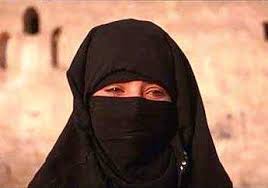
a position unacceptable by Saudi standards—, finally gave the Wahhabi establishment:

the justification needed to get him out of the Kingdom in 1963.

He then re-established
himself in his country of birth, Syria, before leaving for Jordan in 1979.

However, the
opposition al-Albani encountered
from the Wahhabi religious
establishment was not merely intellectual:

By
putting into question the methodological foundations upon which the
Wahhabis had built their legitimacy, he was also challenging their
position in the Saudi religious field.
From its inception, Wahhabism had established itself as a religious tradition—at the core of which laid a number of key books, both in creed and law. This tradition had been monopolized by a small religious aristocracy from Najd, first centred around Mu-hammed bin ‘Abd al-Wahhab Najdi and his descendants known as the Al al-Shaykh:
From its inception, Wahhabism had established itself as a religious tradition—at the core of which laid a number of key books, both in creed and law. This tradition had been monopolized by a small religious aristocracy from Najd, first centred around Mu-hammed bin ‘Abd al-Wahhab Najdi and his descendants known as the Al al-Shaykh:

before
opening up to a small number of other families. In the Saudi system
as it took shape, the members of aristocracy would become the only
legitimate transmitters of the Wahhabi tradition; in this context
independent scholars were excluded because they had not
received “proper
‘ilm” from “qualified” ulama.
Traditional Wahhabi ‘ilm, therefore, was the fruit of a process of transmission and depended on the number of ijazas—a certificate:

by
which a scholar acknowledges the transmission of his knowledge (or
part of it) to one of his pupils, and authorizes him to transmit it
further—given by respected Wahhabi scholars.
This
is the very logic of al-Albani—who, himself, owned very
few of these certificates—would challenge by promoting his
critical approach. As a matter of fact, according to al-Albani,
transmission has no importance whatsoever, because, every hadith
being suspect, the fact that it was narrated by a respected scholar
cannot guarantee its authenticity.
On
the contrary, the important process of accumulation—a good
scholar of hadith being someone who has memorized a large sum of
hadith and, more importantly, the biographies of a large number of
transmitters. Thus, the science of hadith can be measured according
to the objective criteria unrelated to family, tribe, or regional
descent, allowing for a previously absent measure of meritocracy.
More
importantly, al-Albani claims of
being more faithful to the spirit of Wahhabism than ‘Abd
al-Wahhab himself made the former’s ideas
very popular among Salafi youth:

Religious entrepreneurs
For all these reasons, al-Albani’s ideas would rapidly become a means for Salafi religious entrepreneurs from outside the Wahhabi aristocracy to challenge the existing hierarchy.

Al-Albani himself quickly gathered a large following, in Saudi Arabia and beyond. He would soon have to be recognized, despite the initial hostility of the Wahhabi religious establishment, as one of the leading figures in Salafism.
In the mid-1960s, a number of al-Albani’s disciples in Medina founded al-Jamaa al-Salafiyya al-Muhtasiba (The Salafi Group which Commands Good and Forbids Evil), a radical faction of which, led by Juhayman al-’Utaybi, would storm the grand mosque in Mecca in November 1979.
In the mid-1960s, a number of al-Albani’s disciples in Medina founded al-Jamaa al-Salafiyya al-Muhtasiba (The Salafi Group which Commands Good and Forbids Evil), a radical faction of which, led by Juhayman al-’Utaybi, would storm the grand mosque in Mecca in November 1979.

Many
of the group’s members—and
especially its scholars—were either of Bedouin descent
or non-Saudi residents, and were thus marginalized in the religious
field. Their activism came, in part at least, as a response to their
marginalization.
One
of the main religious figures of this group—who
was “lucky” enough to have been thrown out of
the Kingdom in 1978 and therefore did not take part in
the 1979—was Muqbil
al-Wadi’i, who subsequently re-established himself
in his native Yemen and became the country’s most prominent Salafi
scholar.
In the late 1980s, some of al-Albani’s pupils, led by Medinan shaykh called Rabi’ al-Madkhali, formed an informal religious network generally referred to as al-Jamiyya (”the Jamis”, named after one of their key members, Muhammad Aman al-Jami).
Beyond
their focus on hadith, the Jamis became
known as emphasizing al-Albani’s calls
not to indulge in politics and for denouncing those who did. Again,
many of the Jamis were
peripheral origin (al-Madkhali was
from Jazan, on the Yemeni border, while al-Jami was
from Ethiopia) and had therefore been excluded from all
leading positions in the religious field.
They would finally gain prominence in the early 1990s, when the Saudi government supported them financially and institutionally, in the hope of creating an apolitical ideological counterweight to the Islamist opposition led by the al-Sahwa al-Islamiyya (the Islamic Awakening), an informal religio-political movement which appeared in Saudi Arabia in the 1960s as the result of a hybridization between Wahhabism, on religious issues, and on the ideas of the Muslim Brotherhood, on political issues.
In the 1990s, a few students of al-Albani would go so far as to challenge both the Wahhabi religious aristocracy and al-Albani himself.
Following
the teachings of an Indian shaykh called Hamza
al-Milibari, they would promote the centrality of hadith,
while criticizing al-Albani for relying, in his critique of hadith,
on the methods used by late traditionists—at least so they claimed.
On
the contrary, they would pride themselves for relying exclusively
on the methodology of the early traditionists (that is those anterior
to al-Dar Qutni (917-995)) and would therefore name
their approach manhaj
al-mutaqad-dimin (the methodology of the early ones).
Again,
most of these scholars were peripheral figures, such as Sulayman
al-’Alwan, a very young—al-’Alwan was
born in 1970 and started to become known as a
scholars while he was in his twenties—shaykh of non-tribal descent,
and ‘Abdallah al-Sa’d, whose
family had come from the city of Zubayr in Modern Iraq.
The
two of them would later become key figures in the Saudi
Jihadi trend, challenging the political order after
they had challenged the religious order. As a consequence,
they would be arrested and jailed after the May 2003
bombings.
Mu-hammad Nasir al-Din al-Albani’s denunciation of the “Wahhabi paradox” and his promotion of a new approach to the critique of hadtih as the pillar of religious knowledge have prompted a revolution within Salafism, challenging the very monopoly of the Wahhabi religious aristocracy.
Mu-hammad Nasir al-Din al-Albani’s denunciation of the “Wahhabi paradox” and his promotion of a new approach to the critique of hadtih as the pillar of religious knowledge have prompted a revolution within Salafism, challenging the very monopoly of the Wahhabi religious aristocracy.
As
a consequence, al-Albani’s ideas have given independent
Salafi religious entrepreneurs a weapon with which to fight their way
into previously closed circles. Although none have yet achieved
al-Albani’s prestige, some have become recognized scholars.
Interestingly
enough, al-Albani’s rise to
prominence as a de facto part of an establishment he once rejected
has encouraged some of disciples, proponents of the “methodology
of the early ones,” to
call—along al-Albani’s earlier line—for an
even “purer” approach
to the critique of hadith. As this shows, the revolutionary power of
his methods remains intact.

This Evil man who said:
"the dome over the Prophets grave should be destroyed"!

--
Evil
al Albani demanded in four or five of his books that
the Noble Grave be brought out
of the Mosque in Madina and its Green
Dome destroyed.
He
states: “I have found no evidence for the
Prophet’s – Allah bless and greet him – hearing of the salaam
of those who greet him at his grave” and “I do not know from
where Ibn Taymiyya took his claim: In Majmu`a al-Fatawa (27:384).
That
he – Allah bless and greet him – hears the salaam from someone
near.” This and the previous item are among his greater enormities
and bear the unmistakable signature of innovation and deviation.
In
his notes on Nu`man al-Alusi’s al-Ayat
al-Bayyinat (p. 80) and his Silsila
Da`ifa (#203).
Evil Collaborators
Muqbil
ibn Hadi al-Wadi`i who
asked that the Noble Grave be
brought out of the Mosque and the Green
Dome destroyed
Muqbil
ibn Hadi al-Wadi‘i –
known through his books and tapes for his propensity to insult and
disparage those of the Ulema who disagree with him, those who call
unto Allah, and the pious of this Community of Islam – to produce
some research at the end of his studies at the Islamic
University of Madîna titled
“About
the Dome Built over the Grave of the Messenger ”
sponsored by Shaykh
Hammad al-Ansarî.
In
this paper he demands openly and without shame that the
Noble Grave be brought out of the Mosque, deems the presence of the
Grave and Noble Dome there major innovations, and asks that they both
be destroyed! On top of this you granted him high marks
and a passing grade!
--
"It
is not permitted to glorify buildings and historical sites,"
proclaimed Sheikh Abdulaziz bin Baz,
then the kingdom's highest religious authority, in a
much-publicized fatwa in 1994.
"Such
action would lead to polytheism. ... [S]o it is necessary to reject
such acts and to warn others away from them."
* A pamphlet
published by the Ministry of Islamic Affairs, endorsed by Abdulaziz
Al Sheikh, the Grand Mufti of Saudi Arabia, and distributed at
the Prophet's Mosque, where Mohammed, Abu Bakr, and the Islamic
Caliph Umar ibn Al Khattab are buried, reads,
"The
green dome shall be demolished and the three graves flattened in the
Prophet's Mosque,"
according to Irfan
Al Alawi, executive
director of the London-based Islamic Heritage Research Foundation.
This
shocking sentiment was echoed in a speech by the late Muhammad
ibn Al Uthaymeen, one of Saudi Arabia's most
prominent Wahhabi clerics, who delivered
sermons in Mecca's Grand Mosque for over 35 years: "We hope
one day we'll be able to destroy the green dome of the Prophet
Mohammed," he said, in a recording provided by Al Alawi.
---
ADVICE
To Our Brothers the Scholars of Najd
[1420/1999]
Sayyid
Yusuf ibn Al-Sayyid Hashim al-Rifa'i
20.
Aiding the Arch-Innovator, al-Albani
You have
provided a haven to Nasir
Albani 21 and
abetted him, allowing him to publish his book Ahkam
al-Jana'iz wa Bida'uha in
which he openly asks for the removal
of the grave of
the Prophet,
peace and greetings be upon him, from the most noble Mosque! 22
You appointed him a
member in the upper board of the Islamic University in Madina
al-Munawwara and a teacher in it. After the late King Faysal
barred him and expelled him from the country with some of his
followers you returned him to that position.
You still
liberally propagate and recommend his
deviant books but have interdicted and forbidden some of
the books of Hujjat al-Islam al-
Ghazzali, Abu al-Hasan al-Nadwi, 'Abd al-Fattah Abu Ghudda,
al-Maliki, Sa'id Hawwa, al-Buti and others of the Ulema of the
Muslims. Where is justice and equity?
--------------------------
21 When
he was banned from Syria before his expulsion from Saudi
Arabia. He lived house arrest in Amman until his death in
1999. Cf. Appendix,"Albani&co." [T].
22 He
reiterates this foolishness in his Tahdhir
al-Sajid,Hijjat al-Nabi, and Manasik
al-Hajj wa al-'Umra.[T]
---------------
But, hold on... he wrote
a 'Will' to preserve his own grave?

------------------------------------------
Al-Albani wrote
in his wasiyya (will):
" I
ask that the graveyard (for my burial) be an old one, to ensure that
its graves will not be exhumed (leveled to the ground)". (Ma'a
Shaykhinaa Naasiris-Sunnah wad-Deen - pages 27-31).
------------------------------------------
Similarly,
when the Sufi cemetery was razed by Syrian Salafis to make
way for the University of Damascus and its campus in that city, King
Abd al-Aziz Ibn Sa`ud of Saudi Arabia intervened
personally, on the advise of Wahhabi clergy, to preserve intact the
graves and tombs of Ibn Taymiyya and his student Ibn
Kathir.

---
"" To
add more insult to
the wounds of humiliation of Prophet (صلى
الله عليه و آله وسلم) Salafis built
a Public Toilet's on
his house in Makka where he lived and prayed with his family
for 28
years. Millions
of people are made to shit, urinate and spit on this sacred place, 24
hours of the day.
When Prophet(صلى
الله عليه و آله وسلم) migrated
to Makka, Paagans did not destroy his house and built a public
toilet on it.
This
kind of torture and humiliation was not done
even by Makkan
Mushrikeen.
...for
the full article and further reading visit : Here
--------------------------------
" The Ijazas
"

The Ijazas of bin Baz & al-Albani
A self proclaimed Scholar:

Quote, Wahabi/Salafi:
"Shaykh
Al-Albani has Ijaza in hadith from the late Allamah Shaykh Muhammad
Raghib at-Tabaagh with whom he studied hadith sciences,
gaining authority to transmit from him. The Shaykh himself refers to
this Ijaza in Mukhtasar al-Uluw (p.72) and in Tahdir as-Sajid
(p.63). He has a further Ijaza from Shaykh Bahjatul
Baitaa (through whom his isnad stretches back to Imam
Ahmad). These are mentioned in the book Hayat Al-Albani (the Life of
Al-Albani) by Muhammad ash- Shaibaani. This sort of Ijaza is given
only to those who have excelled in hadith and can be trusted to
accurately convey a hadith. A copy of the Ijaza is in the possession
of his student, Ali Hassan al-Halabi. So it is not correct to
say that the Shaykh is self- taught from books, without authority and
without Ijaza." [end of quote]
^Answer/Response:
Muhammad
Raghib al-Tabbakh (1293-1370)
had many Shaykhs, among
them al-Nabhani and some of the other Shuyukh
of Sayyid Muhammad ibn `Alawi, and was a great Hanafi
historian and `alim of hadith with whom Abu Ghudda read,
among other things, al-Qari's al-Asrar al-Marfu`a, but
Abu
Ghudda said Tabbakh raised Ibn
Taymiyya almost to the rank of a prophet.
There
are three reasons why this ijaza fails to
prove anything new about Albani:
1. Albani
only had ijaza from Tabbakh and no one else to my knowledge.
2.
Albani calls Tabbakh "Shaykhi fil-ijaza" which means he did
not read anything with him.
3. Albani
was known to denigrate the ijaza system as "worthless in our
times," which automatically makes any ijaza he might have
invalid.
Hence,
this entire aspect of his life definitely fits his profile as
"self-taught from books."
Muhammad
Bahjat al-Baytar (1311-1396)
was Albani's friend and taught
`aqida in Saudi Arabia for years but in Syria he was asked only to
teach Tafsir and hadith.
Both Tabbakh and Baytar were
run-of-the-mill Wahhabis.
The
remark "through whom his isnad
stretches back to Imam Ahmad" shows ignorance of
isnad on the part of the speaker as [1] the same can be said of all
possessors of isnad, so it does not confer any particular
distinction; and [2] the greatness of isnad is the fact that it rises
back up to the Prophet, upon him blessings and peace, not just the
Successors of the Successors.
Sources
consulted:
Albani,
Mukhtasar al-`Uluw (p. 72). Al-Hafiz, Muti`. Tarikh Ulama' Dimashq
fil-Qarn al-Rabi` Ashar (2:918- 925) [on Baytar]. Rashid, Muhammad
`Abd Allah. Imdad al-Fattah (p. 307-312) [on Tabbakh].
---
Sheikh
Nuh comments on this here:
Our
teacher in hadith, Sheikh Shu‘ayb
al-Arna’ut, tells my wife
and me that Sheikh Nasir
al-Albani learned his hadith knowledge from books and
manuscripts in the Dhahiriyya Library in Damascus, as
well as his long years working on books of hadith.
He
did not get any significant share of his knowledge from living hadith
scholars, according to Sheikh
Shu‘ayb, for the very good reason that there wasn’t anyone in
Damascus at the time who knew much about hadith, and he didn’t
travel anywhere else to learn. I have heard Salafis say
that he has an ijaza from one
person in Syria, but it
could only be (according to Sheikh Shu‘ayb) from someone
with far less knowledge than himself
I
believe Sheikh Shu‘ayb about this, because his family,
like Sheikh Nasir’s, were of the Albanians who emmigrated to
Damascus at the collapse of the Ottoman Empire, and they all know
each other rather intimately.
The
impression one gets is that Sheikh Nasir’s father, Sheikh
Nuh al-Albani, was so strict a Hanafi that
he produced something of an over-reaction in Sheikh
Nasir not only against Abu
Hanifa and his madhhab, but against traditional
Islamic sheikhs as well.
According
to Sheikh Shu‘ayb, Sheikh
Nasir studied tajwid or ‘Qur’anic recitation’ and
perhaps the Hanafi fiqh primer Maraqi al-falah [The ascents to
success] with his father Sheikh Nuh al-Albani, and possibly other
lessons in Hanafi fiqh from Sheikh Muhammad Sa‘id al-Burhani, who
taught in Tawba Mosque, in the quarter of the Turks on the side of
Mount Qasiyun, near Sheikh Nasir’s
father’s shop.
Sheikh
Nasir subsequently found that his time could be more
profitably spent with books and manuscripts at the Dhahiriyya Library
and in reading works to students, and he did not attend anyone else’s
lessons
As
for his ijaza or
‘warrant of learning,’ Sheikh Shu‘ayb tells us that it
came when a hadith scholar from Aleppo, Sheikh
Raghib al-Tabbakh, was visiting the Dhahiriyya Library in
Damascus, and Sheikh Nasir was pointed out to him as a promising
student of hadith.
They
met and spoke, the sheikh authorized him "in
all the chains of transmission that I have been authorized to
relate"—that is to say, a general ijaza,
though Sheikh Nasir did not attend the lessons of the sheikh or read
books of hadith with him.
Sheikh
Raghib al-Tabbakh had chains of sheikhs reaching back
to the main hadith works, such as Sahih al-Bukhari, the Sunan
of Abu Dawud, and hence had a contiguous chain back to the
Prophet (Allah bless him and give him peace) for these books. But
this was an authorization (ijaza) of tabarruk, or ‘for the blessing
of it,’ not a ‘warrant of learning’—for Sheikh
Nasir did not go to Aleppo to learn from him, and he did
not come to Damascus to teach him
This
type of authorization (ijaza), that of tabarruk, is a practice of
some traditional scholars: to give an authorization in order to
encourage a student whom they have met and like, whom they find
knowledgeable, or hope will become a scholar. The reason I
know of such ijazas is because I have one, from the Meccan
hadith scholar Sheikh Muhammad ‘Alawi al-Maliki, which
authorizes me to relate "all the chains of transmission that
I [Muhammad ‘Alawi al-Maliki] have been authorized to relate by my
sheikhs," including chains of transmission reaching back to
the hadith Imams Malik, al-Bukhari, Muslim, Abu Dawud, al-Tirmidhi,
al-Nasa’i, Ibn Majah (Mecca: Muhammad ‘Alawi al-Maliki,
1412/1992).
Though
my name is on the authorization, and it is signed by the
sheikh, it does not make me a hadith scholar like he
is, because aside from some of his public lessons, my
hadith knowledge is not from him but from Sheikh
Shu‘ayb, whom I have actually studied with. Rather, Sheikh
al-Maliki knows my sheikhs in Damascus, that I am the translator
of ‘Umdat al-salik [Reliance of the traveller]
in Shafi‘i fiqh, that we have known each other for
some time, and he approves of my way. The scholarly value of
such ijazas is merely to establish that we have met.
Would
you be so kind as to telling us who Al
Albanis Sheikh Was?
As
far As I know Al Albanis Sheikh was
the Damascus library.
Now If
I spent my days at my local library studying anatomy and surgical
techniques would you let me do
surgery on you?
This
is because you don’t trust my expertise and by allowing me to
perform surgery on you, you might die.
As
A Muslim I hope you would say that your deen is more valubel than
your life, so why would you take your deen from a man who is self
taught, but you wouldnt get operated on by a man who is self taught?
Now
you justify his lack of formal education in the field of
hadeeth by saying that his work was checked and verifyed by such
schoalrs as Bin Baz - but I
dont know of Bin Bazs Ijaza either - and Bin
Bazs level of scholarly work contradicts the
majority of Ulema throughout history.
Al
Bani demonstrated that he was self taught by making
over 1200 forgivable mistakes, which
are only forgivable if he himself admits and corrects his mistakes by
repenting in front of the People of Knowledge, as well as the sincere
believers who may have been relying on his 'classifications of
Hadith'.
There
are a total of 852 ahadeeth
that Alabni classsified
as Sahih in one book and then contradicted
himself in another classifying
them as daeef. He also made many errors in the
biographies of many of the transmitters. All perfectly common
mistakes made by a person who is an amateur muhadeeth.
However,
one of the more lofty mistakes made by Albani over
his life time was the practice of showing a narrator "trustworthy"
when Alabani wanted to prove
something, and then magicly becomes
"untrustworthy"
when Albani is arguing against
someone.
The salafis have
places Albani on
the same level as the best muhadeeth in
history - but can you find
even 10 mistakes like Albanis from
that of Abu Hanifah, Malik, Shafi'i, Ibn Hanbal, Bukhari,
Muslim, Abu Dawood, Tirmidhi, Ibn Maja, al-Nasai, Daraqutni, Hakim,
Asqalani and so on . . . . Allah's mercy be upon them.
Al
Albani himself places
himself on much more lofty station - that
above the Imam Bukhari and Imam Muslim (RA) by taking many of the
hadeeths they clssified as Sahih and re-calssifying them
as Daeef with
the presumption that Albani, with
his years in the damascus library, knew better
then them. Here is one example of such a bold claim:
SELECTED
TRANSLATIONS FROM VOLUME 1
No. 1: (*Pg. 10 No.1)
Hadith: The Prophet (Peace and blessings be upon him) said: "Allah says I will be an opponent to 3 persons on the day of resurrection: (a) One who makes a covenant in my Name but he proves treacherous, (b) One who sells a free person (as a slave) and eats the price (c) And one who employs a laborer and gets the full work done by him, but doesn't pay him his wages." [Bukhari no 2114-Arabic version, or see the English version 3/430 pg 236].
Al-Albani said that this Hadith was DAEEF in "Daeef al-Jami wa Ziyadatuh, 4/111 No.4054".
No. 1: (*Pg. 10 No.1)
Hadith: The Prophet (Peace and blessings be upon him) said: "Allah says I will be an opponent to 3 persons on the day of resurrection: (a) One who makes a covenant in my Name but he proves treacherous, (b) One who sells a free person (as a slave) and eats the price (c) And one who employs a laborer and gets the full work done by him, but doesn't pay him his wages." [Bukhari no 2114-Arabic version, or see the English version 3/430 pg 236].
Al-Albani said that this Hadith was DAEEF in "Daeef al-Jami wa Ziyadatuh, 4/111 No.4054".
Little
does he know that this Hadith has been narrated by Ahmad and Bukhari
from Abu Hurayra (Allah be pleased with him)!!
---

"Praise Albani"
Quote:
Wahhabi
says: [...]
brother
abylayl it is very simple to understand,
Let
us say Nasir al-Din Albani now referred as
(Mr
"X")
did not use
computer like some modern day ijaza scholars use to analyze hadith
chains.
-
Mr. X analyzed 20,000 hadiths
-
Mr. X was right in his analysis for 15,000 hadiths
-
Mr. X was wrong on 5000 hadiths
So,
blow up out of proportion those 5000
mistakes and make
him boogeyman.
my
ijaza might be revoked as well if i praise Albani !!" Here
---------------------------------------------------------------------------------
It
is immensely troubling and their attitudes
towards Hadith by Salafi/Wahhabi
sect, they seem to openly
reject Hadith from Bukhari and then there is the issue
of Ibn Taymiyyah their "imam"
rejecting the famous Hadith of Bukhari ‘There
was Allah and nothing else besides him’ (Bukhari
3091)…and so many other Hadith and not to forget the same stance
of al-Albani weakening/rejecting
sound Hadith at will...
Wahhabi forgets
that al-Albani was considered
by his fellow admirers as "sheikh ul
hadith" and a "Mujaddid"
Now this
Wahhabi need's to look
at this from a different point/angle, when giving examples of
Mr "X,Y and Z" in
regards to Scholars, Experts/Professionals and specially al-Albani as
a "Hadith Specialist"
I
don't think any other person in any other professional
field/subject, can seriously get away by making numerous
blunders errors/mistakes?
Now Let's
refer to al-Albani
" Mr.X " as
A Surgeon:
-Mr.
X operated on 20,000 patients!
-Mr.
X was successful in operating on 15,000 patients.
-Mr.
X was neglectful,wrong made mistakes/error's on 5000 patients which
died.
So,
now you may blow up as much as you want out of
proportion 5-10-50 or even 5000 patients and just for argument
sake say only "one" patient
died due to the surgeons own
error/mistake!
Now
consider that this "one" was your own
relative say
your Mother or your Father , which
were killed by
the surgeons own mistake...!
Would
this surgeon still have the certificate to practice
his profession?
What
would you say to The Surgeon?
Would
you say:
It's
OK! it was only a Mistake!
Just
a "
Boogeyman" ?

Al-Albaani was
in charge of the teaching of the subject of Mustalalhahul
Hadeeth (the science of Hadeeth) for three years at the Islamic
University of Madinah in Saudi Arabia.

And
these are some of misadventures of He
published “corrected” editions
of the two Sahihs of al-Bukhari and Muslim,which
he deceitfully called “Abridgments” (mukhtasar) in violation of the integrity of these mother books.

He
published newly-styled editions of the Four Sunan, al-Bukhari’s
al-Adab al-Mufrad, al-Mundhiri’s al-Targhib wa al-Tarhib, and
al-Suyuti’s al-Jami` al-Saghir, each of which he split into two
works, respectively prefixed Sahih and Da`if in violation of the
integrity of these mother books.

^Albani compares
Hanafi fiqh to the Gospel. Source: In his commentary 18- on
al-Mundhiri's Mukhtasar Sahih Muslim, 3rd ed. (Beirut: al-Maktab
al-Islami, 1977, p. 548). This phrase was removed from later
editions.
Albani said:
"Many of those who interpret figuratively [the Divine
Attributes] are not heretics (zanâdiqa), but they say what heretics
say," and "figurative interpretation is the very same as
nullification (al-ta'wîl `ayn al-ta`tîl)."(1)
Albani suggests
that al-Bukhari is a disbeliever for interpreting the Divine Face as
dominion or sovereignty (mulk) in the verse"Everything will
perish save His countenance" (28:88) in the book of Tafsir in
his Sahih: "Except His wajh means except His mulk, and it is
also said: Except whatever was for the sake of His countenance."
Albani blurts
out: "No true believer would say such a thing" and "We
should consider al-Bukhari innocent of that statement."(2)
---
(1) Fatawa
(p. 522-523) and Mukhtasar al-`Uluw (p. 23f.).
(2) Fatawa (p. 523).
(2) Fatawa (p. 523).
---
al-Albani removed 83 chapters
and 329 Ahadith from one
single Hadith book, Adab Al-Mufred, written by Imam
Bukhari. He did the same thing with many other important Ahadith
books.
Imam
Bukhari and his works are accepted by entire Muslim Ummah as most
authentic, after Quran. He is the undisputed Imam in Hadith
Narration.
Can
any Muslim in the world believe that Imam Bukhari will write 83
spurious and concocted Hadith Chapters in his book?
To
declare Imam Bukhari to have included 83 Chapters
of wrong Ahadith means, Albani has branded Imam Bukhari as totally
untrustworthy and unworthy to be a Hadith scholar,let alone be an
Imam of Hadith (استغفر اللہ).
He declared Imam Bukhari as ‘Mushrik’ (Nauzubillahi) for translating ‘Wajhu’ as ‘dominion and sovereignty (mulk) in verse كُلُّ شَيْءٍ هَالِكٌإِلَّا وَجْهَهُ ۚ (Meaning – Everything will perish save His countenance (Al-Qasas – 88) in the ‘Book of Tafsir in Sahih Bukhari.
He wrote : “No true believer would say such a thing” and “We should consider Bukhari innocent of that statement”. (Look how intelligently he is branding Imam Bukhari as Mushrik (Astghfiruallah ). Reference – (Introduction to al-San’ani’s Raf al-Astar – page 24-25).
He declared Imam Bukhari as ‘Mushrik’ (Nauzubillahi) for translating ‘Wajhu’ as ‘dominion and sovereignty (mulk) in verse كُلُّ شَيْءٍ هَالِكٌإِلَّا وَجْهَهُ ۚ (Meaning – Everything will perish save His countenance (Al-Qasas – 88) in the ‘Book of Tafsir in Sahih Bukhari.
He wrote : “No true believer would say such a thing” and “We should consider Bukhari innocent of that statement”. (Look how intelligently he is branding Imam Bukhari as Mushrik (Astghfiruallah ). Reference – (Introduction to al-San’ani’s Raf al-Astar – page 24-25).
These questions just baffle the Innocent unsuspecting Muslims for answers from the Wahhabi Salafi Saudi Governament
who’s faith this evil scholar has robbed

by preaching them
THEIR fancy lies and error filled views about SAHI HADITH .

of
Mu-hammed [Nasir] Al-Albani
video
also
see this article
as well that contains the download to Shaykh Mamduh’s
refutation of al-Albani on this issue.


